
About
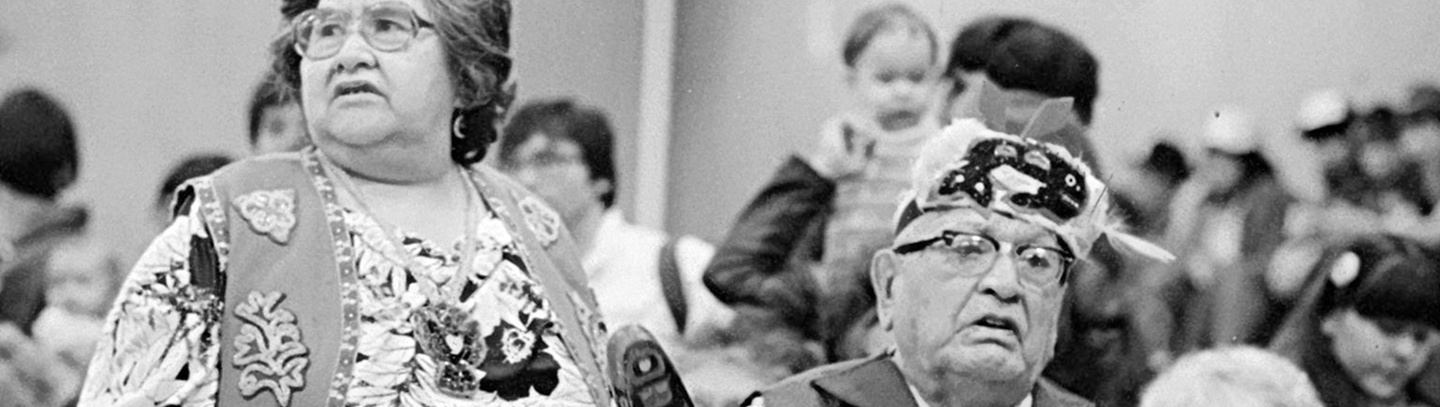
Celebration is a biennial dance-and-culture festival formed to celebrate the cultures of the First Peoples of Southeast Alaska. Since the first Celebration in 1982, the event has grown into the largest gathering of Tlingit, Haida, and Tsimshian people in the world. Everyone is welcome.
Origin & History
Prior to European contact, the peoples of the Northwest Coast held many traditional ceremonies in which singing, dancing, formal oratory, and feasting took place. As the economy of the region changed to one based on cash rather than trade and sharing, some Native traditions floundered. Dances, songs, traditional oratory, and knowledge of clan protocol were in danger of being lost to history. At the time, Native people were also emerging from a long period of cultural oppression by Westerners.
Native people worried that young people weren’t learning their ancient songs and dances. Realizing this, Elders created Celebration as a way to bring Native people together to showcase and preserve their traditions and customs.
SHI held the first event in 1982 to celebrate the fact that Tlingit, Haida, and Tsimshian cultures had survived.
Time-Honored Customs Made New
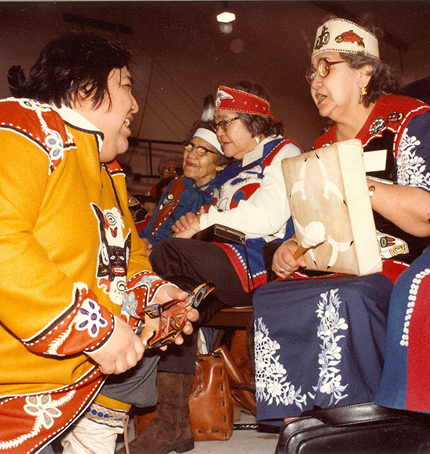
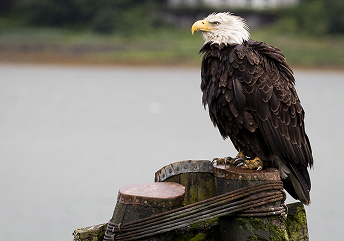
Celebration is a new tradition. During earlier times, a clan from one moiety would always host a clan from the other moiety. An Eagle clan, for example, might host a Raven clan and then, the reverse would occur in order that balance, reciprocity, and respect be maintained. Those who danced together as either hosts or guests were from one clan, one side. Now, clan members have scattered in order to pursue careers and personal interests, and the formal system of reciprocal obligation has become more difficult to maintain, although traditional ceremonies are still a vital part of Northwest Coast culture. At Celebration, some clan members still gather as single-clan Tlingit, Haida, and Tsimshian dance groups but most groups at Celebration represent combinations of many clans.
As times have changed, the peoples of the Northwest Coast have adopted revitalized festival traditions while continuing to maintain the old. Although Celebration follows the pattern of a traditional ceremony, it is not a potlatch or memorial party. Adoptions, name giving, memorial services, and other events that are a proper part of those traditional gatherings are not part of Celebration and are observed at other times.
Celebration Today
The first Celebration drew only a couple of hundred Native people. But that first event sparked a movement across the region—a renaissance of Native culture that prompted people largely unfamiliar with their heritage to learn their ancestral songs and dances and to make regalia for future Celebrations.
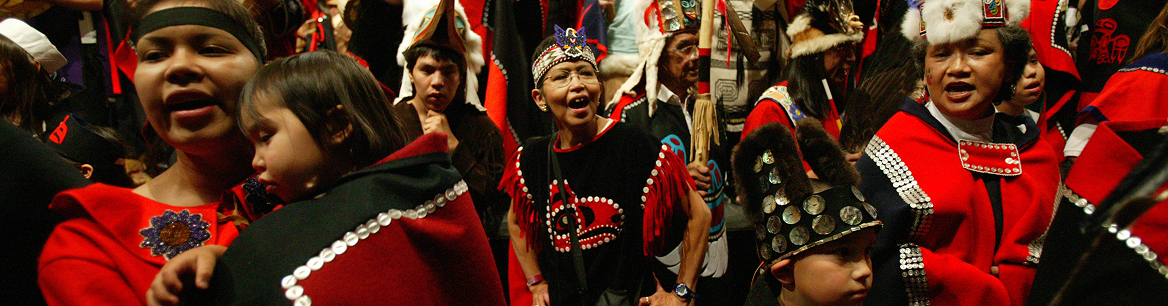
Today, Celebration has grown into one of the largest cultural events in the state, drawing thousands of people to the four-day festival in Juneau. The festival has grown to include associated events, such as a Juried Art Show and Competition, a Juried Youth Art Exhibit, a Toddler Regalia Review, a Native Artist Market, and Native food contests.
We think our ancestors would be proud to know that what they created in 1982 was successful beyond their dreams and that their progeny today know their ancient songs and dances and wear their regalia—their history—for all the world to see.
Watch SHI’s documentary on the beginning and evolution of this iconic event.