
About
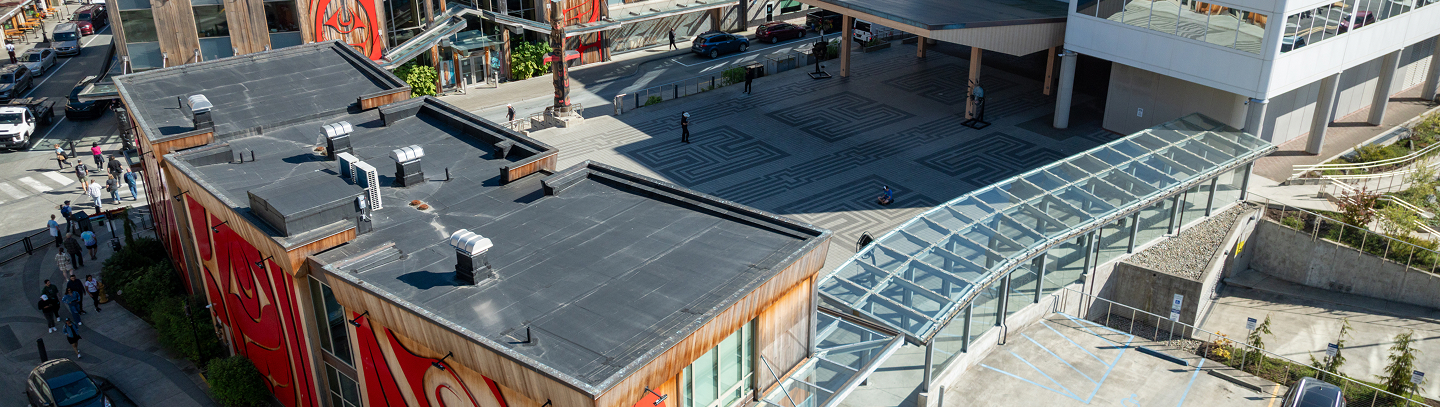
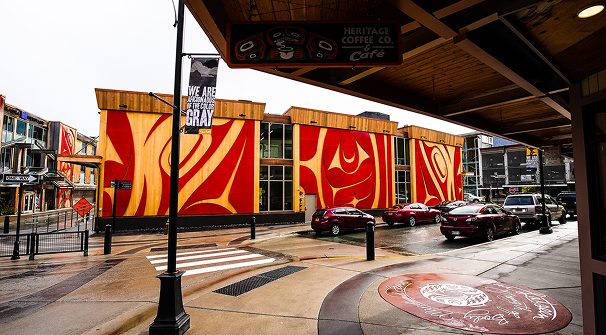
SHI opened its Atnané Hít (Sealaska Heritage Arts Campus) in 2022 to provide art classrooms for instruction in areas such as basketry, textiles, and printmaking, carving, metal work, and skin sewing. It encompasses approximately 6,000 square feet and houses indoor and outdoor spaces for artists to make monumental Northwest Coast art, plus a retail gallery. Atnané Hít promotes arts to help maintain cultural practices, advance art forms, and establish Juneau as the Northwest Coast art capital of the world.
The name was conceived at a meeting of SHI’s Council of Traditional Scholars, a group of knowledgeable clan leaders and Elders who guide the institute’s programming. A clan point, the chair, X̱’unei Lance Twitchell, gave the name Atnané Hít, which means “Art’s House.”
Editorial section
“We were all astounded,” said Rosita Kaaháani Worl, SHI president and anthropologist. “We all thought we didn’t have a Tlingit word for art. He said it referred to an iconic event between a spiritual being and an ancestor. When the iconic event is graphically displayed, it is called ‘art.’ When the art is put on a ceremonial object or regalia and a clan ceremoniously presents the object to clans of the opposite moiety and tells the story of the iconic or legendary event, the object is transformed into at.óow (a sacred object).”
When the institute opened the Sealaska Heritage Arts Campus a couple of years later, it was given the Tlingit name Atnané Hít, a term almost lost to time.
Grand Opening
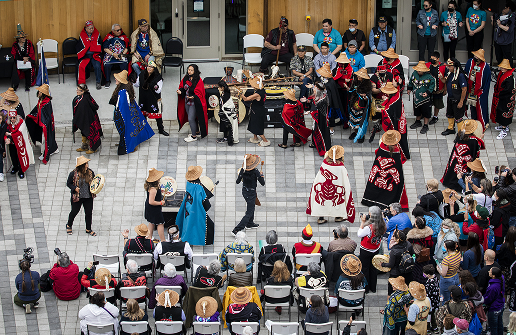
In 2022, SHI opened its Atnané Hít (Sealaska Heritage Arts Campus). The ceremony drew hundreds of people in person, while others watched SHI’s livestream, which is available on the institute’s YouTube channel.
About Northwest Coast Art
Northwest Coast art evolved over several thousand years in the rich and complex Indigenous societies of the Pacific Northwest of North America. Art adorned everything from monumental structures and ceremonial regalia to basic utilitarian objects. The simplicity of the design components—elements of a system known as formline—belie the complexity and sophistication that was achieved in this two-dimensional NWC art tradition. From the earliest contact with Westerners, wood carvings, weavings, and other cultural pieces depicting NWC art were aggressively collected by museums and visitors and acclaimed as one of the most distinctive and unique art traditions in the world. Today, this ancient tradition continues to evolve through the work of contemporary NWC artists. Visitors to SHI will see NWC art in major installations and in more subtle spaces, such as the pavers at the campus plaza, which depict an architectural interpretation of a basketry design.
Watch video shorts highlighting Alaska Native artists and their connection to the land.
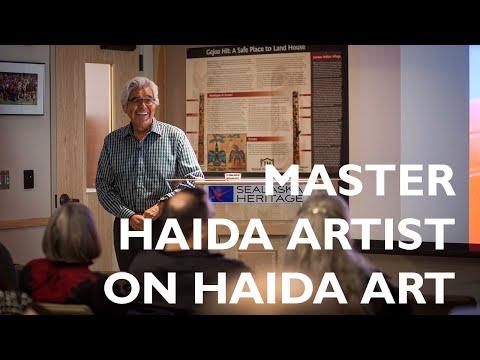
A Personal Journey
Master Haida artist Robert Davidson describes his upbringing, his journey to becoming a Northwest Coast artist, and the art he produces today.

Crystal Worl on Apprenticing with Preston Singletary
Crystal Worl reflects on apprenticing with Preston Singletary while helping create the monumental glass house screen.
Haa Latseení
Strength of Body, Mind, and Spirit.

Tlingit Property Law and Cultural Appropriation
In the presentation, Sealaska Heritage Institute President Dr. Rosita Worl highlights SHI’s goal of promoting cross-cultural understanding and how it applies to teaching Northwest Coast art. “This goal implies an ideal of symmetrical power between the Native and non-Native society in which an Indigenous society acknowledges a right to teach non-Natives about Native culture and Northwest Coast art.”
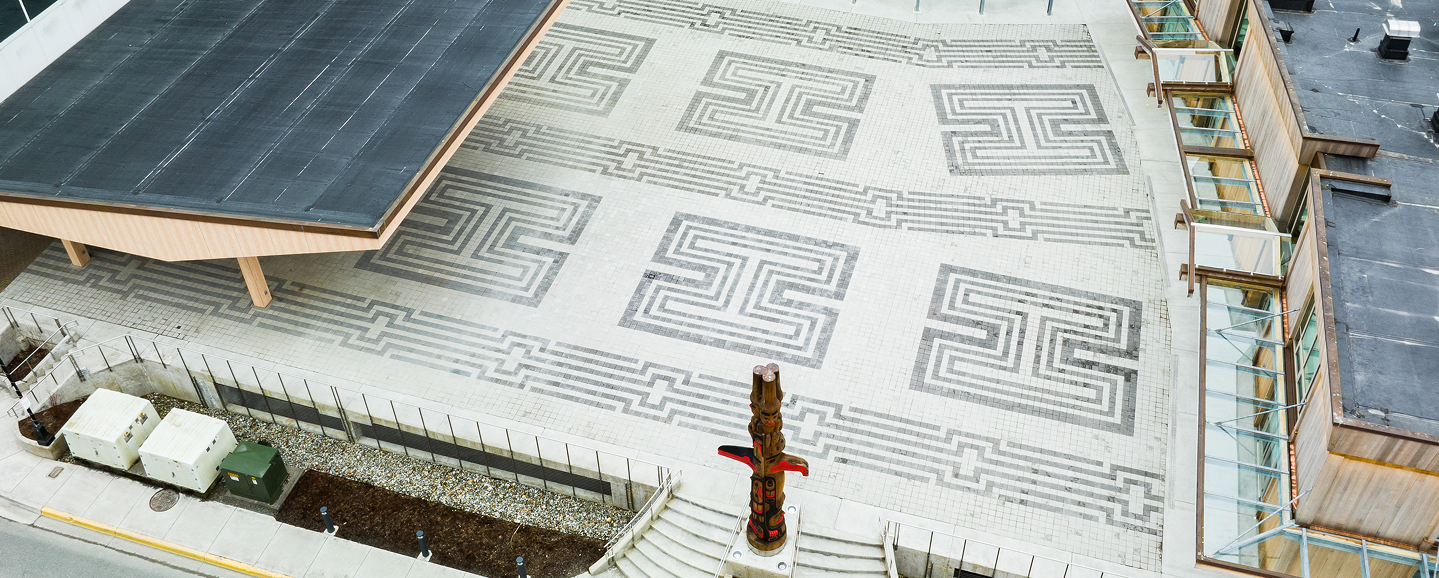
The Plaza
The plaza is home to the Sealaska Cultural Values Pole, a rare and massive totem carved on all sides and the first one of its kind in Alaska. The totem, made by Haida artist TJ Young with assistance from Tlingit and Tsimshian carvers, represents all three tribes of Southeast Alaska and the four core cultural values that guide SHI programs. It also features Faces of Alaska, a spectacular monumental art installation featuring bronze masks that represent Alaska’s five major Native groups, including the Inupiat, Yup’ik, Alutiiq, and Athabascan. The fifth mask depicts the Tlingit, Haida, and Tsimshian people of Southeast Alaska, who share similar cultures. The space also features a covered area for performances and other activities.
Art Installations
-
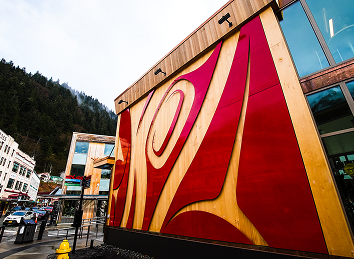
Building Art
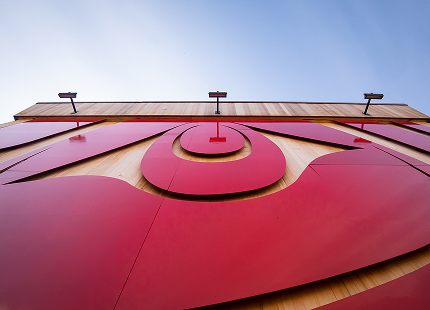
Learn MoreThe back side of the campus building features monumental art by the renowned Haida master artist Robert Davidson and was based on his original painting Greatest Echo.
-
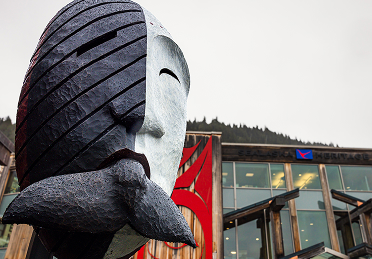
Faces of Alaska
Learn MoreThe plaza features Faces of Alaska, a series of masks representing Alaska’s five major Native groups.
-
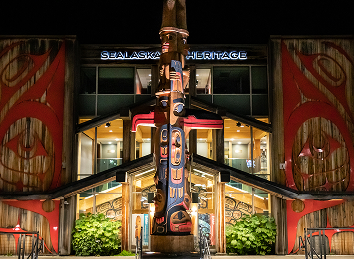
Sealaska Cultural Values Pole
Learn MoreThe plaza features Faces of Alaska, a series of masks representing Alaska’s five major Native groups. The masks were made by master artists from across the state.
First Fridays & Gallery Walk
SHI participates in First Fridays, monthly events that celebrate the arts in Juneau. The institute sponsors artists at the campus and the Walter Soboleff Building and opens its exhibit for free to the public.
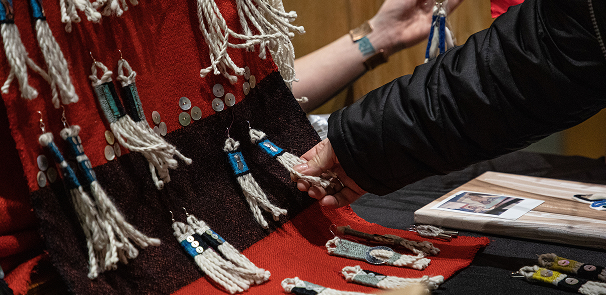
Classes
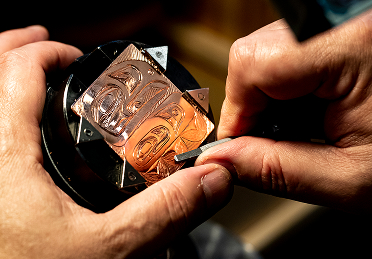
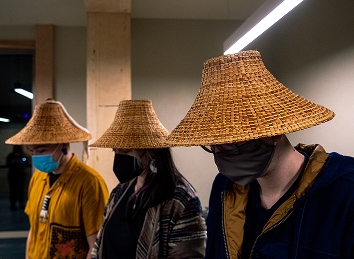
SHI offers numerous Northwest Coast art classes at Atnané Hít, and some courses are offered for University of Alaska Southeast credits that count toward a University of Alaska Southeast AA degree with a Northwest Coast arts emphasis and are transferable to the Institute of American Indian Arts in Santa Fe, New Mexico.