About
In 2025, SHI officially opened its Indigenous Science Building, which features state-of-the-art equipment and tools to teach science, technology, engineering, arts, and mathematics through the world view of the Tlingit, Haida, and Tsimshian.
The Indigenous Science Building, our third facility, represents a forward-thinking approach to education, integrating traditional ecological knowledge with Western scientific practices. It provides classrooms and learning experiences to showcase the knowledge of Tlingit, Haida, and Tsimshian peoples that has existed for thousands of years. By bringing Indigenous science into the classroom, we empower Alaska Native youth and community members with critical thinking skills that will strengthen regional economies and community health. K–12 programming and community classes will inspire a new generation of scientists, leaders, and innovators.

Building Goals
-
Hands-On Learning
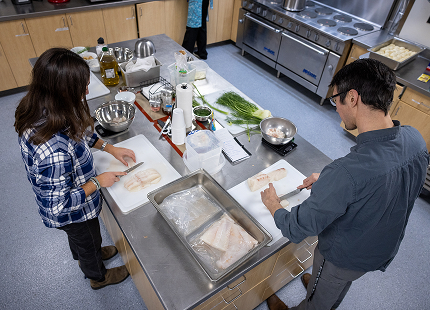
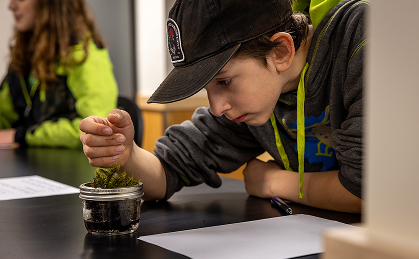
The Indigenous Science Building is an active center for SHI education programs, emphasizing hands-on learning grounded in Indigenous knowledge, language, and values. SHI offers culturally relevant activities for all ages. The building, which includes four floors, features a traditional foods kitchen and three cutting-edge labs with resources such as 3D printers, electronics, and laser cutters.
-
Traditional Foods & Medicine Kitchen
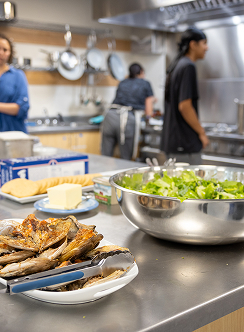
The kitchen has space for intergenerational learning opportunities; community and family workshops on harvesting and preservation; food festivals, cooking classes, storytelling, and cultural celebrations; and professional development opportunities for teachers.
-

Digital Media Lab
A digital media lab accommodates video and audio production, photography and podcast training; workshops for documenting ceremonies and oral narratives; and rural community communications, video conferencing, and live streaming.
-
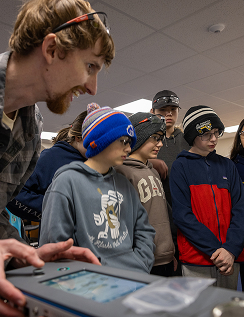
Fabrication Lab & Makerspace
A fabrication lab and makerspace offers design lab sessions for students on topics such as tool design and entrepreneurship, as well as unstructured studio time for collaboration and mentorship.
-
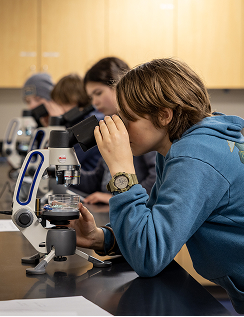
Indigenous Science Research Lab
An Indigenous science research lab provides space for mentorships, training, scientific investigations, and data collection and analysis; scientific research focused on cultural resources; and traditional knowledge science projects.
Check out some examples of Indigenous Science!
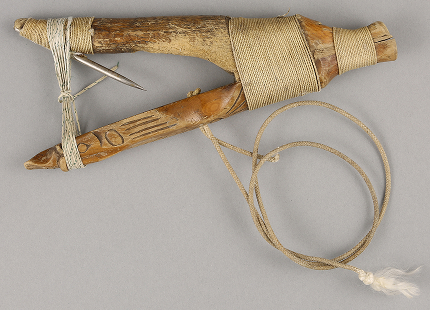
Halibut Hooks
Southeast Alaska Native people developed ingenious hooks that were engineered to catch medium-sized halibut, leaving the smallest and the largest fish behind to promote the conservation of the species. The technology also made it easier to land the halibut in canoes because the hooks had a mechanism to flip the fish belly side up when pulling them in—making them more docile and easier to land. The hooks were commonly adorned with traditional art or clan crests reflecting the spiritual dimensions between humans and animals or fish. The northern Northwest Coast halibut hook was inducted into the Alaska State Committee for Research Alaska Innovators Hall of Fame in 2018 because its sophistication and innovation make it unique from any other fishhook in the world.
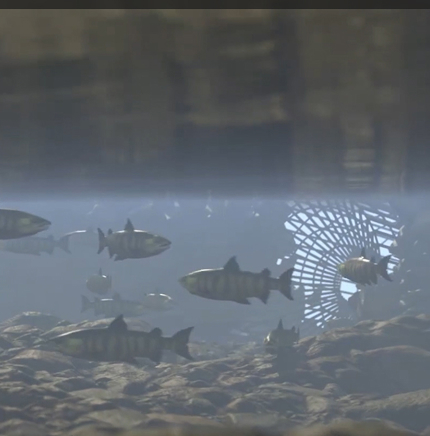
Fish Traps
Southeast Alaska Natives invented intertidal fish traps that allowed them to harvest salmon in a way that protected the populations. Salmon follow the tidal cycle when they swim toward the streams in which they were born. As the tide comes in, salmon approach their streams and ascend them on the high tide to spawn. Those salmon that do not ascend move back into the estuary or bay to wait for the next high tide. Tlingit fishermen observed this pattern and devised a system of intertidal fish traps to catch salmon only during the ebbing tide. These traps flooded during high tide, allowing salmon to swim freely upstream to spawn. This flexible design provided a bountiful catch while ensuring enough salmon entered their streams to reproduce.
In 2022, scientists exploring an underwater region of southern Southeast Alaska discovered what might be the oldest stone fish weir ever found in the world. Thought to date to at least 11,100 years ago, the fish trap pushes back Native occupation of the region by more than 1,000 years.
Climate Changes Documented in Native Place Names
The Tlingit, Haida, and Tsimshian people historically named places using monikers that described rich cultural resources. The names document productive hunting, fishing, and gathering locales as well as spiritual events. They also document climate change. For example, Southeast Alaska’s Sitkoh Bay near the Tlingit village of Angoon is named for glaciers when there are none in its vicinity today. Deisheetaan (Beaver) clan history tells how the name Sit’ku was derived from the presence of glacial ice in Sitkoh Bay and Chatham Strait many years ago. Although we do not find glaciers there today, geomorphological studies suggest that a large valley glacier carved out Sitkoh Bay during the late Wisconsin Ice Age (25,000–10,000 years ago). Interested in Indigenous place names? Check out our book—Our Grandparents’ Names on the Land!