
Walter Soboleff’s Legacy
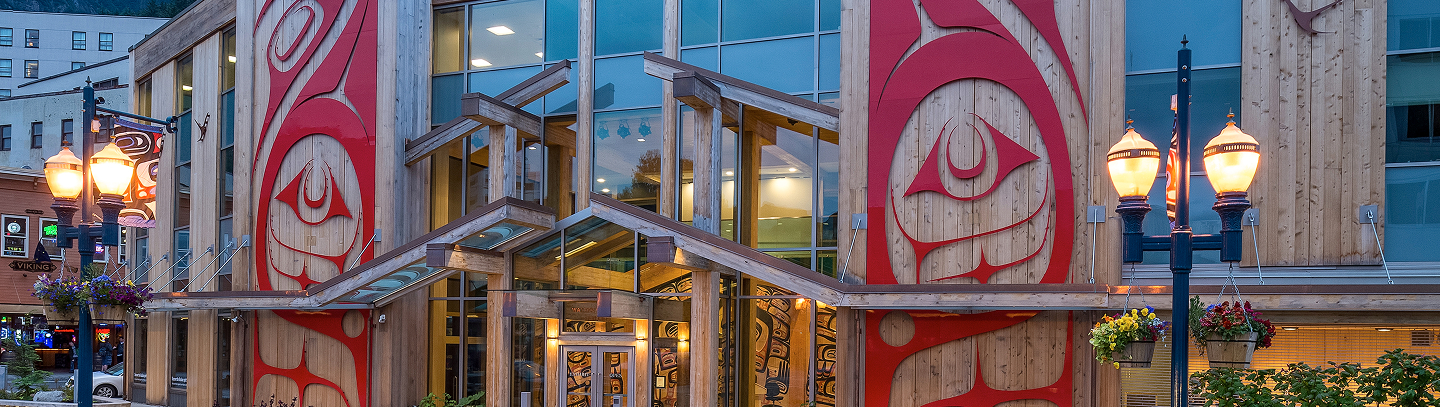
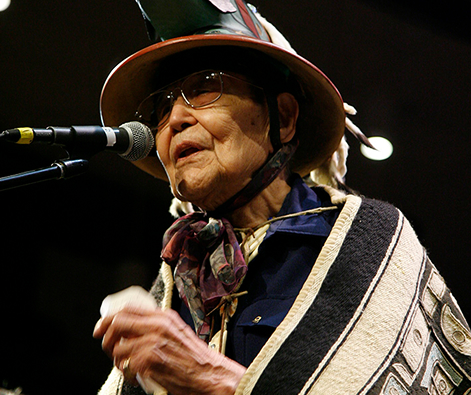
SHI is headquartered in its Walter Soboleff Building, which the institute opened in 2015. The building is named for Kaajaakwtí (Dr. Walter A. Soboleff), a Tlingit of the Yéil (Raven) moiety, L’éeneidí (Dog Salmon) clan. Dr. Soboleff was a spiritual leader who helped Native and non-Native people alike at a time when segregation was the norm. Throughout his life, he worked tirelessly to advance Native civil rights.
Dr. Soboleff’s generosity of spirit and small acts of kindness made him a giant of a man to people across Alaska. He practiced our traditional Native values, especially the concept of Haa Shuká—honoring our past while preparing a better future for our children’s children.
-
Grand Opening of the Walter Soboleff Building
Watch the grand opening ceremony for the Walter Soboleff Building, which opened in 2015.
Watch -
A Guide to the Walter Soboleff Building
This booklet offers a comprehensive look at how this building came to be, what’s inside, and how Sealaska Heritage incorporated traditional protocols into the grand opening ceremony.
Download -
Through the Gauntlet: The Making of SHI’s Walter Soboleff Building
This documentary tells of the sometimes difficult journey to bring this landmark building to fruition.
Watch
Clan House
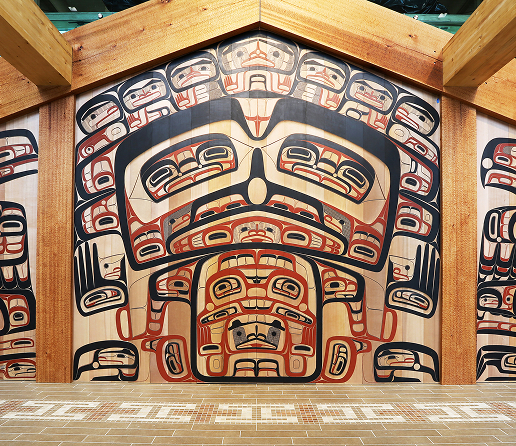
The building includes a traditional clan house clad in hand-adzed cedar. The clan house, named Shuká Hít (Ancestors’ House), features a spectacular glass screen flanked by two house posts made by the renowned Tlingit glass artist Preston Singletary. The posts depict Eagle and Raven warriors, which symbolize the protectors of the land and culture. It also features cedar planks hand-adzed by the award-winning Tlingit artist Wayne Price. Adzing produces a texture that is commonly seen in Northwest Coast art, canoes, clan houses, and ceremonial objects. Watch a video of master artist Price, who did all of the adzing in the clan house. The clan house is included in SHI’s exhibit and often features events, such as lectures.
Store
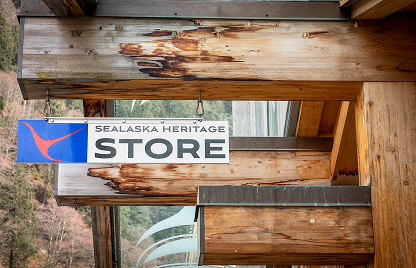
The main level includes the Sealaska Heritage Store, which sells authentic Native art and souvenirs. Proceeds from sales help perpetuate Native arts and contribute to sustainable economies in economically depressed communities that lack large commercial enterprises and employment. The revenues derived from the store are re-invested back into art, education, and cultural programming sponsored by SHI.
Ways to Participate
-
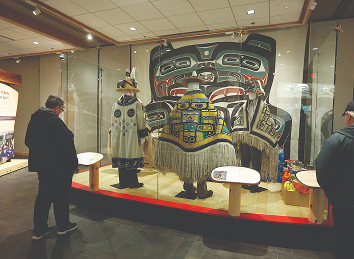
Exhibits
The Walter Soboleff Building includes an exhibits hall featuring displays and interactive spaces that delve into the history, art, and cultures of Tlingit, Haida, and Tsimshian cultures. Visitors are also welcome to tour SHI’s Kootéeyaa Deiyí (Totem Pole Trail), which features 14 totem poles downtown and along the Juneau waterfront. SHI plans to eventually install 30 totem poles, an ancient art form that evolved over several thousand years in the rich and complex Indigenous societies of the Pacific Northwest. Historically, totem poles were carved with the crests and spirits of clans and depicted significant events and clan histories. Explore Kootéeyaa Deiyí using our pocket guide!
Learn More -
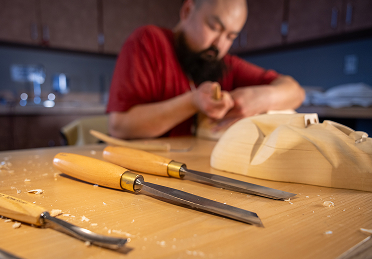
Artist Residencies
The main level includes a room near the exhibits area for artists in residence. This dedicated space gives Northwest Coast artists access to SHI’s ethnographic and art collection.
Learn More -
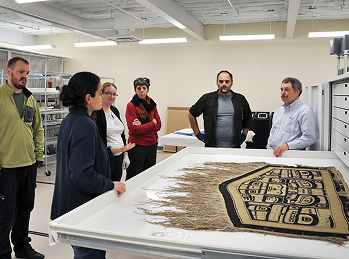
Archives & Collections
SHI’s archives and art and ethnographic collections are stored in a large, climate-controlled, protected vault in the building. The archives, named in honor of the late Tlingit lawyer and activist William L. Paul Sr., houses 3,100 linear feet of historical and cultural material documenting the Tlingit, Haida, and Tsimshian languages, culture, and history. Many of SHI’s holdings are available to the public for educational and research purposes.
Learn More