The Tlingit, Haida & Tsimshian
The Tlingit, Haida & Tsimshian
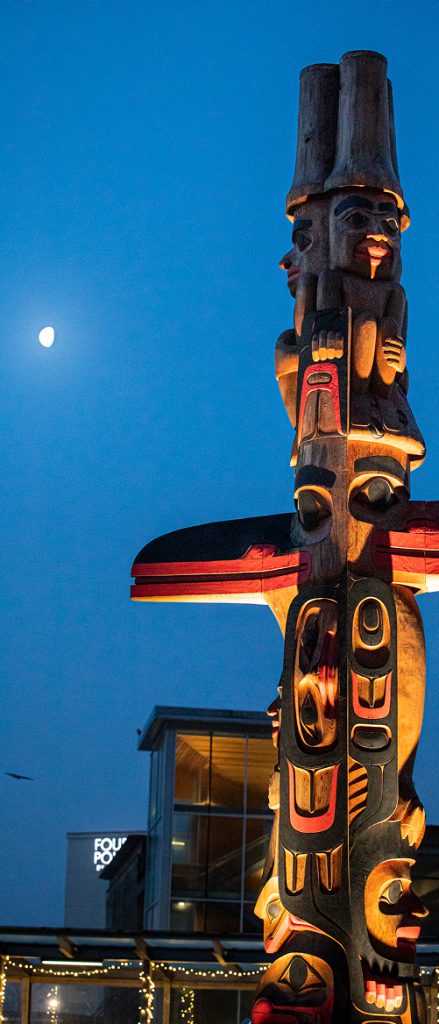
Sealaska Heritage Institute (SHI) serves the Tlingit, Haida, and Tsimshian people of Southeast Alaska, which is comprised of 1,000 islands spread over more than 35,000 square miles. This area has been the homeland of the Tlingit people for at least 10,000 years. It’s also home to the Haida and Tsimshian who arrived in the 18th and 19th centuries.
The First People here thrived in the area, which was rich in natural resources and supported the development of a complex society. Native people established extensive trading networks beyond their homeland and economic systems that led to an abundance of commerce and a socially intricate culture.
Their homeland stretched along a narrow strip of the coastal mainland and included adjacent islands from the Portland Canal in British Columbia to six hundred miles northward beyond Yakutat in the northern region to the Copper River Delta. Through trading and fishing, they were able to fulfill their needs and create a material culture that is unique in the world.
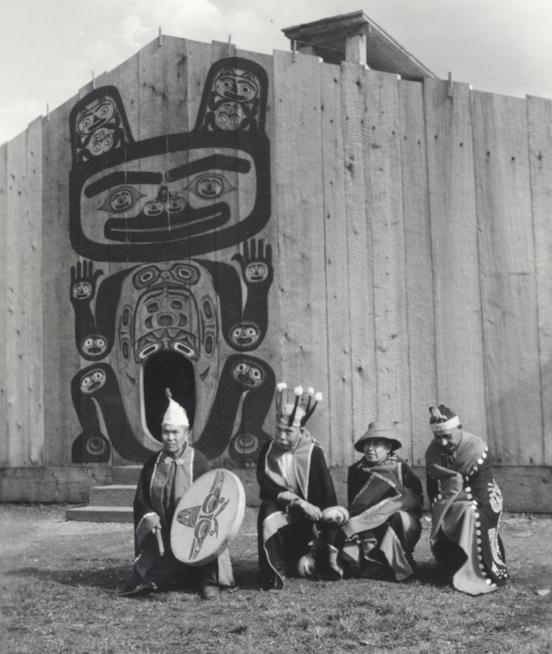
The Indigenous people of the region say they have been here since time immemorial, and science has proven that to be true. In 1996, spelunkers discovered human remains in a cave on Prince of Wales Island, Alaska, and DNA studies confirmed he was a young Native man who died more than 10,000 years ago. The Tlingit people named him Shuká Ḵáa (Tlingit for “Man Before Us”), and in 2017 a DNA study proved that the Indigenous groups living today in southern Alaska and the western coast of British Columbia are his descendants.

With the arrival of Russians in the 1700s, followed by Europeans, Indigenous people saw their populations decimated by foreign diseases and their way of life assailed and oppressed. Indigenous people today recall being forced into boarding schools and punished for speaking their Native tongue. During this period, the colonists suppressed the languages of the Tlingit, Haida, and Tsimshian to the brink of extinction and some ancient art practices unique to the region and the world were almost lost.
Clan leaders across the region met and considered waging war against the invaders. However, realizing the superiority of their weapons, the leaders decided to fight back by utilizing western policy, the legal systems, and institutions of the United States. They also formed their own institutions to unify villages and tribes. In 1980, SHI was founded to provide cultural programming to revitalize the Native languages, cultures, and art practices that were almost erased by Westerners.
Founding of SHI
Sealaska Heritage Institute was founded in 1980 by Sealaska Corporation after being conceived by clan leaders, traditional scholars, and Elders at the first Sealaska Elders Conference. During that meeting, the Elders likened Native culture to a blanket. They told the new leaders that their hands were growing weary of holding onto the metaphorical blanket, this “container of wisdom.” They said they were transferring this responsibility to Sealaska, the regional Native corporation serving Southeast Alaska.
In response, Sealaska founded Sealaska Heritage Institute to perpetuate cultural and educational programs.
We don’t want what you did here to only echo in the air, how our grandfathers used to do things… Yes. You have unwrapped it for us. That is why we will open again this container of wisdom left in our care.
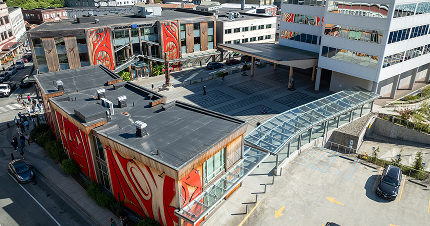
Sealaska continues to provide an annual donation that has provided stability for SHI and has allowed the institute to leverage those funds in seeking additional support from both the private and public sectors. Although SHI is a separate entity as a 501(c)(3), it maintains a strong relationship with Sealaska, and six Sealaska directors sit on the institute’s Board of Trustees. Sealaska also supports SHI’s biennial Celebration and made major contributions for the construction of the institute’s Walter Soboleff Building and Atnané Hít (Sealaska Heritage Arts Campus). The institute is governed by a Board of Trustees and guided by a Council of Traditional Scholars, a Native Artist Committee, a Southeast Regional Language Committee, and an Education Committee.
SHI’s Work
Since its founding, SHI has been a leader in Native language documentation and revitalization and produced numerous books and other resources for language students. Most notably, SHI produced the most extensive dictionaries for Tlingit, Haida, and Tsimshian languages along with other resources, including a series of Tlingit language books written by the late scholars Nora and Richard Dauenhauer. In the late 1990s, SHI’s Board of Trustees voted to move from documentation to revitalization of the languages.
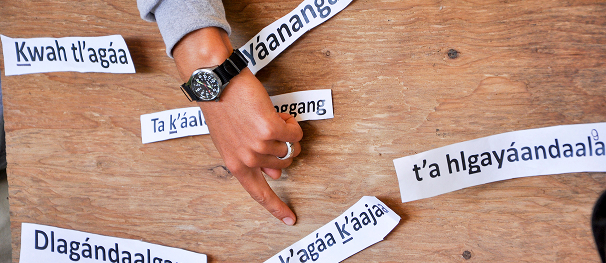
SHI also operates programs to support and teach Northwest Coast arts, develop culturally-responsive educational programs and materials—including its award-winning Baby Raven Reads early literacy book series—and to curate an archive and ethnographic collection. It also operates the biennial dance-and-culture festival, Celebration, which occurs every even year and is one of Alaska’s largest events.
Over the years, the institute has achieved a number of major milestones.
Some Key Years at SHI
-
Sealaska establishes SHI at the urging of clan leaders and Elders.
-
SHI organizes the first Celebration, a dance-and-culture event largely associated with the revitalization of Southeast Alaska Native cultures after many years of oppression by colonists.
-
SHI’s Board of Trustees passes a directive to move from documentation of Native languages to revitalization of them.
-
SHI breaks ground on its Walter Soboleff Building, a facility meant to house spaces for the public to learn about Southeast Alaska Native cultures and to accommodate the institute’s staff.
-
SHI opens the Walter Soboleff Building, a stunning facility that is itself a work of art.
-
SHI breaks ground on its Atnané Hít (Sealaska Heritage Arts Campus), a facility meant to support art instruction and students pursuing a college degree with an emphasis on Northwest Coast arts.
-
SHI opens Atnané Hít, a beautiful building designed to evoke a series of Northwest Coast bentwood boxes.
-
SHI and the community celebrate the raising of 13 totem poles for Kootéeyaa Deiyí (Totem Pole Trail), which features pieces made by master carvers across the region and their apprentices.
-
SHI officially opens its Indigenous Science Building, a space for students to learn in a hands-on environment.